

Location
Mangrove Mountain, Dharug NP
Duration/Distance
~28km / 2 days (circuit)
Track Grade
Medium/Hard walk
- Creek crossings and sections of rock scrambling
- Erratic and unpredictable weather; severe storms possible year-round
- Remote circuit on managed tracks with limited phone coverage
- Sustained ascents and descents on historic road formations
Fitness Level
Suitable if you can:
- Walk 12–15 km per day carrying a full overnight pack (10–15 kg)
- Manage ~300 m total ascent/descent
- Manage creek crossings/rock scrambling on uneven terrain
Pricing
From AU$750 per person
The Dubbo Gully and Ten Mile Hollow Circuit, taking in parts of the Old Great North Road, is one of the great multi-day walks of New South Wales — and one of the most historically layered. Over two days and one night, this loop through Dharug National Park traces some of the earliest colonial infrastructure ever built on the continent: convict-constructed roads, stone bridges and pastoral tracks left largely untouched since the mid-twentieth century.
This is not a walk about scenery alone. It moves through the lived experience of the convict road gangs — up to 720 men who quarried, shaped and laid the sandstone that became the Great North Road between 1826 and 1836 — and through land cared for by its traditional Aboriginal owners long before settlers and pastoral families arrived.
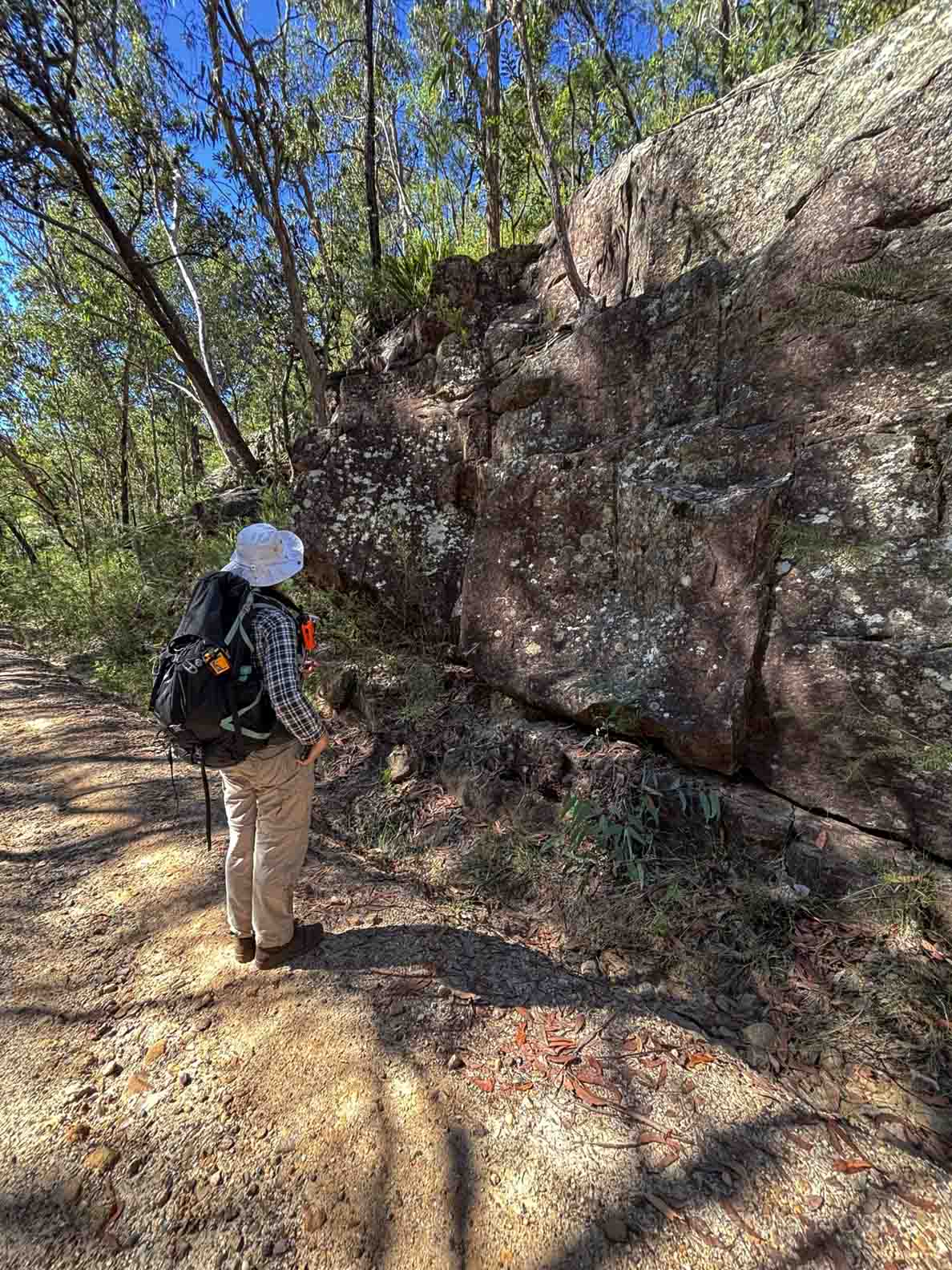
The loop follows the World Heritage-listed Great North Road, Simpsons Track (1828) and Donnys Track (1940s), passing a landscape that still holds its evidence: Clares Bridge, one of the oldest surviving stone bridges on the Australian mainland; Fairview Homestead, the last remaining original homestead in the area; and the Upper Mangrove Creek Cemetery, overlooked by the site where St Thomas’s Anglican Church once stood.
- Walk sections of the World Heritage-listed Great North Road (1826–1836), built by convict gangs, some working in leg irons
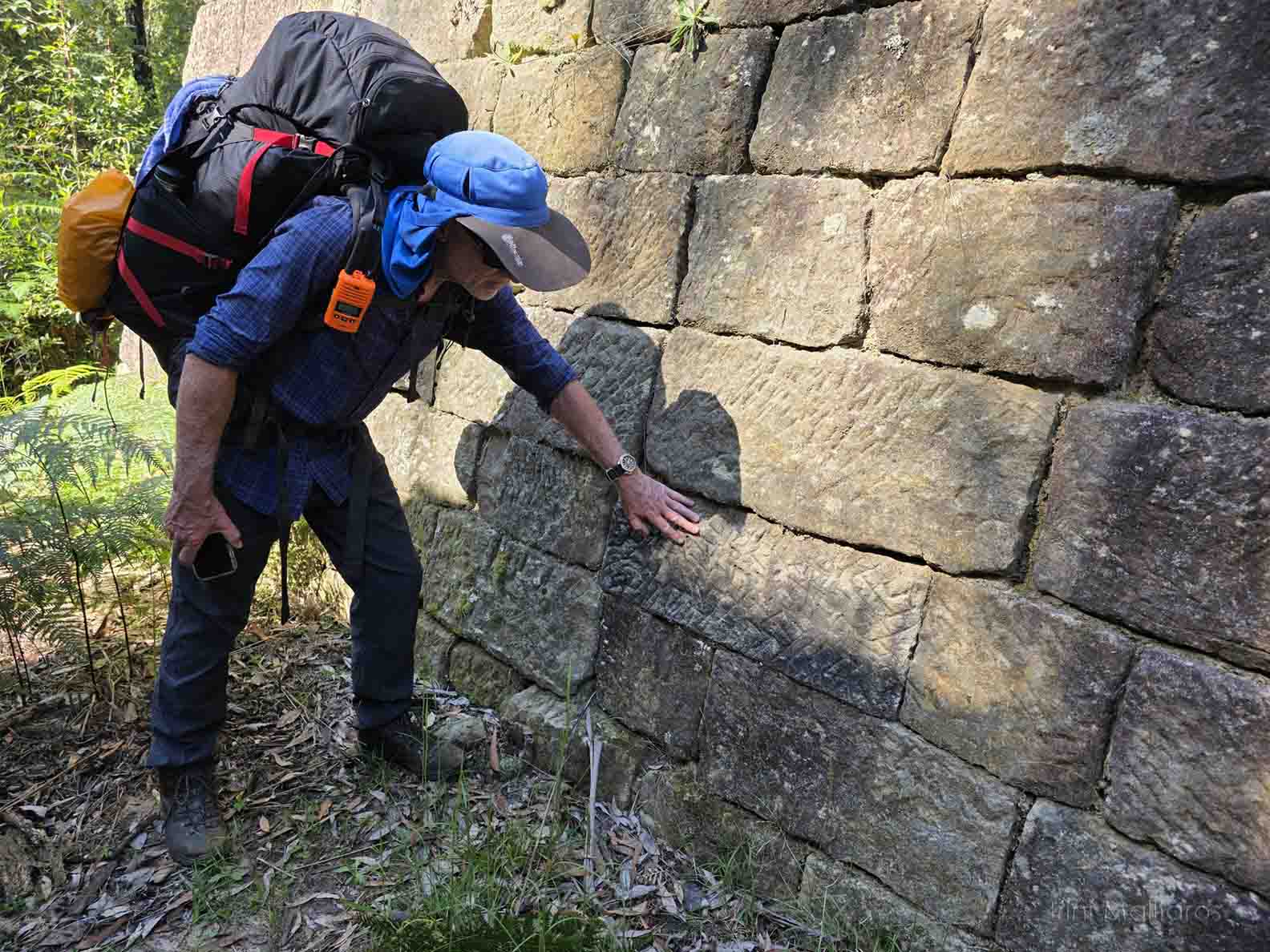
- Cross Clares Bridge, one of the oldest surviving stone bridges on the Australian mainland — built in 1830 and named after convict overseer Arnold Clare
- Explore Fairview Homestead (1922), the last remaining original homestead in the area
- Visit Upper Mangrove Creek Cemetery, Dubbo Gully (1847–1949) — overlooked by the site where St Thomas’s Anglican Church once stood; resting place of at least 21 early settlers
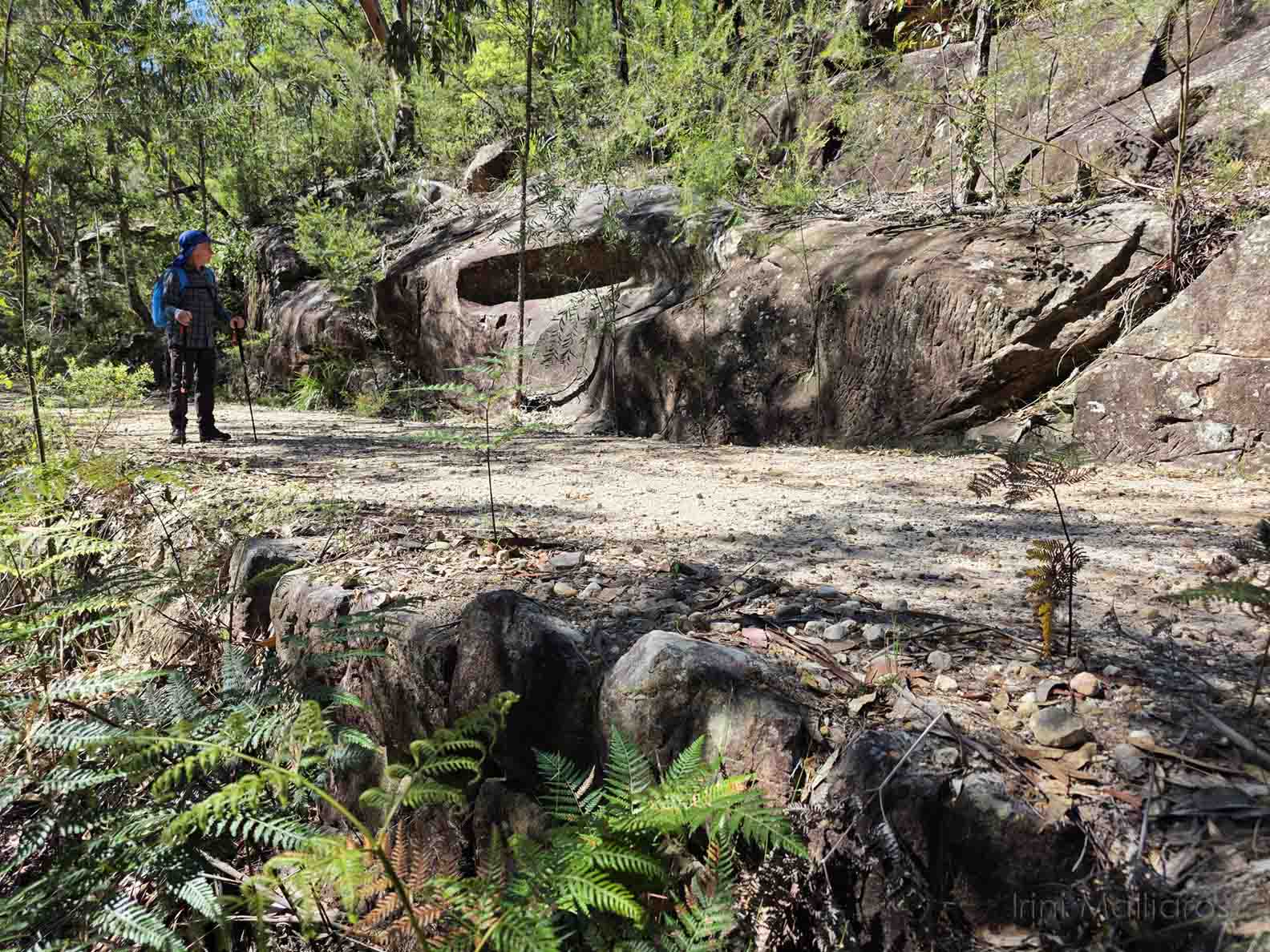
- Trace Simpsons Track (1828) and Donnys Track (1940s), historic roads given back to the landscape
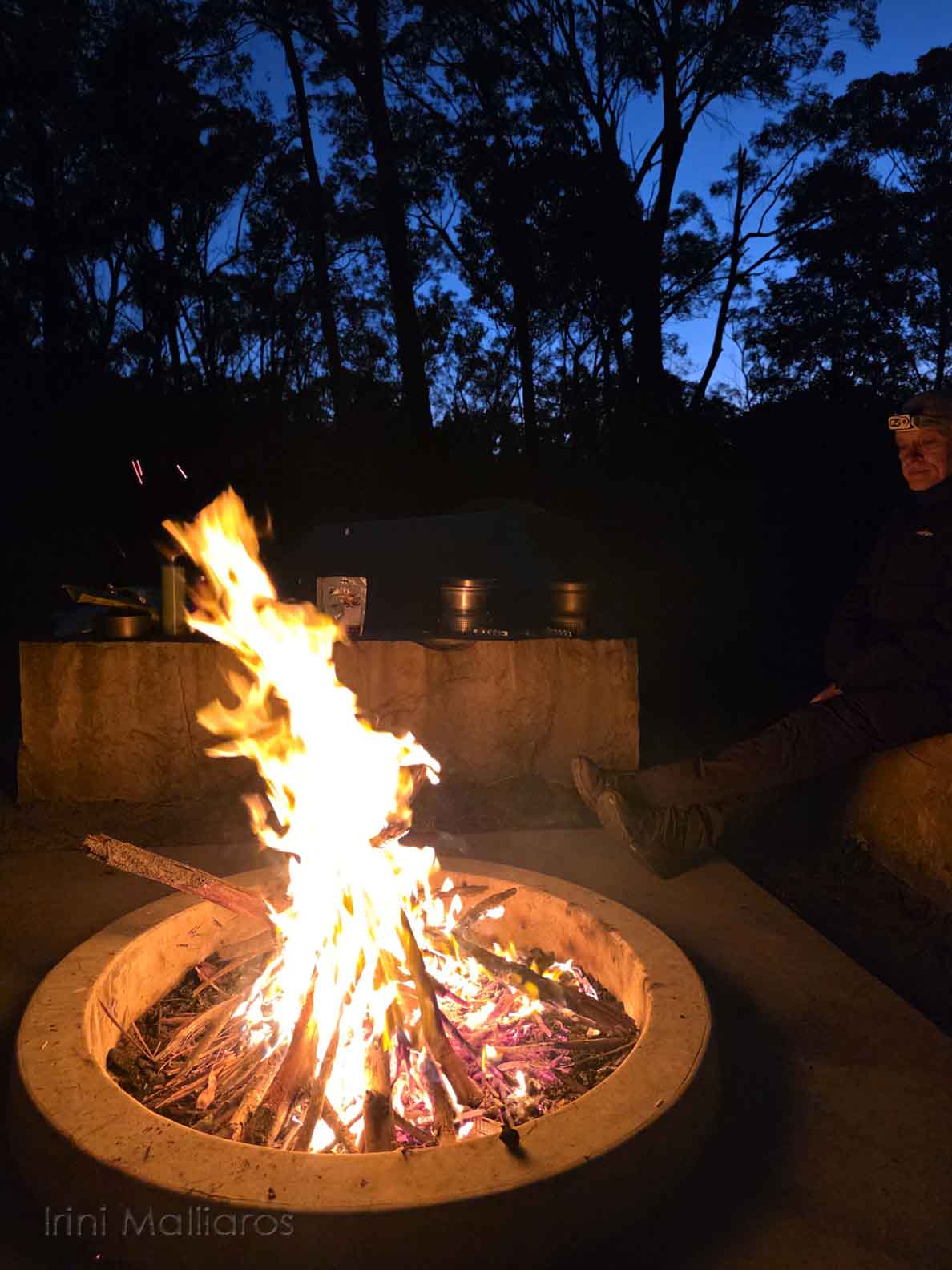
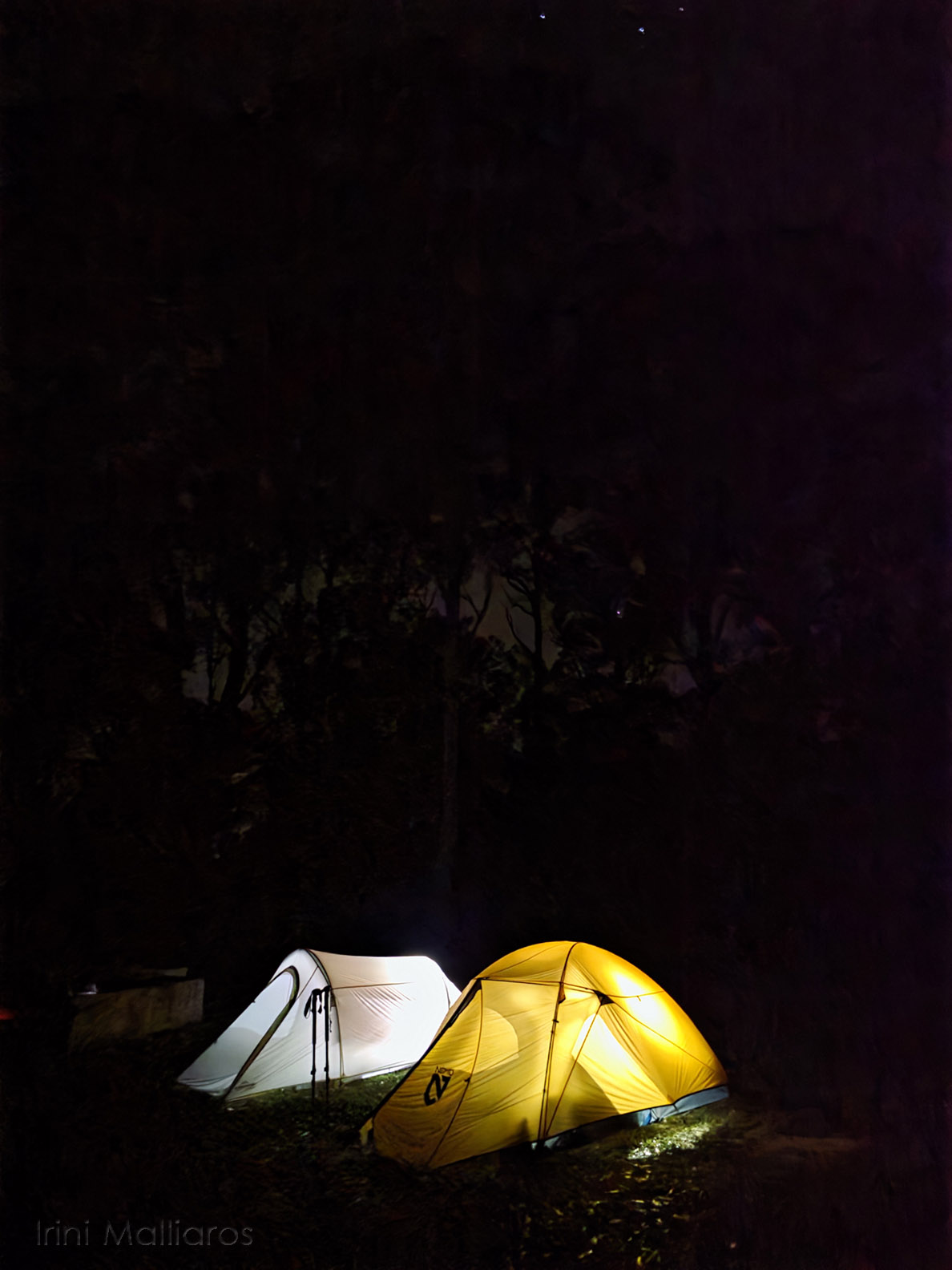
- One night under canvas at Ten Mile Hollow Campground
- Creek crossings, rock scrambling and sweeping sandstone country throughout Dharug National Park
- Specialist-guided experience with qualified archaeologist/historian guides, small-group format
(2 Days / 1 Night | ~28 km circuit)
- Day 1 – Dubbo Gully Carpark → Upper Mangrove Mountain Cemetery → Fairview Homestead → Ten Mile Hollow (Camp) Meet mid-morning at Dubbo Gully Road Carpark. The first day moves through the pastoral and ecclesiastical heart of the circuit — interpretive stops at Upper Mangrove Mountain Cemetery (1847–1949) and Fairview Homestead (1922) trace the lives of the farming families who carved out an existence in this remote valley. Afternoon arrival at Ten Mile Hollow Campground. Camp dinner and evening interpretation around the fire.
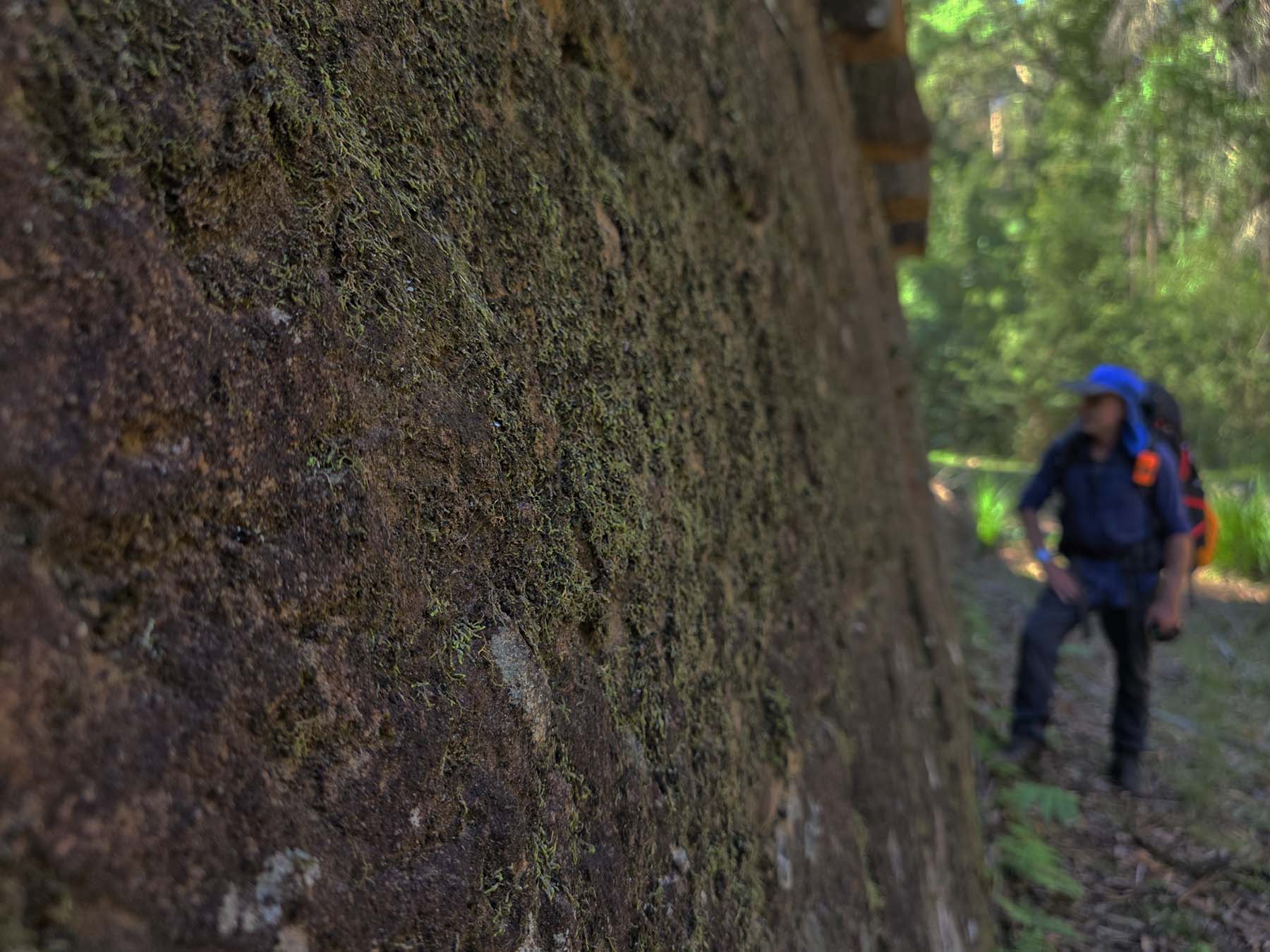
- Day 2 – Ten Mile Hollow → Clares Bridge → Great North Road → Dubbo Gully Carpark Break camp after breakfast and follow the return leg of the loop along the convict-built road formations — Clares Bridge, the evidence of extraordinary stonework cut directly into the cliff face, and the engineering of the Great North Road itself are the story of the day. The circuit rejoins near the cemetery before returning to the carpark. Creek crossings and optional swim stops where conditions allow.
Walking time across both days is approximately 7–8 hours total, including rests and interpretation. Times are approximate and may vary with group pace and weather conditions.
- Professional guiding by qualified archaeologists/historians, trained in bush craft, navigation, remote area first aid and emergency response procedures
- Catering: 1 × dinner, 1 × breakfast, 2 × trail lunches + hot drinks & snacks
- Cooking stoves and filtered/treated water
- Environmentally friendly plates, cutlery and cups for all meals
- Safety and navigation equipment
- National Parks access fees
I'm in! When is it on?
To make a booking, pick a date that suits and the number of people joining you on the adventure and let’s go!
BEFORE booking, please note:
- Pricing
- Standard ticket – Suitable for all participants aged 17+ years.
- Youth ticket – Suitable for participants aged 12-16 years. Youth (12–16) receive 20% off Standard ticket price.
- Minimum age – 12 years old.
- Under-18s – All participants under 18 must attend with a parent/guardian (1:1).
- 65+ years old – Participants aged 65+ must provide a GP medical clearance letter during booking.
- You’ll be asked for date(s) of birth during booking.
By booking you agree to our Terms & Conditions. Please see our Privacy Policy.